Gluten, Skallops, and the Art of Pivoting
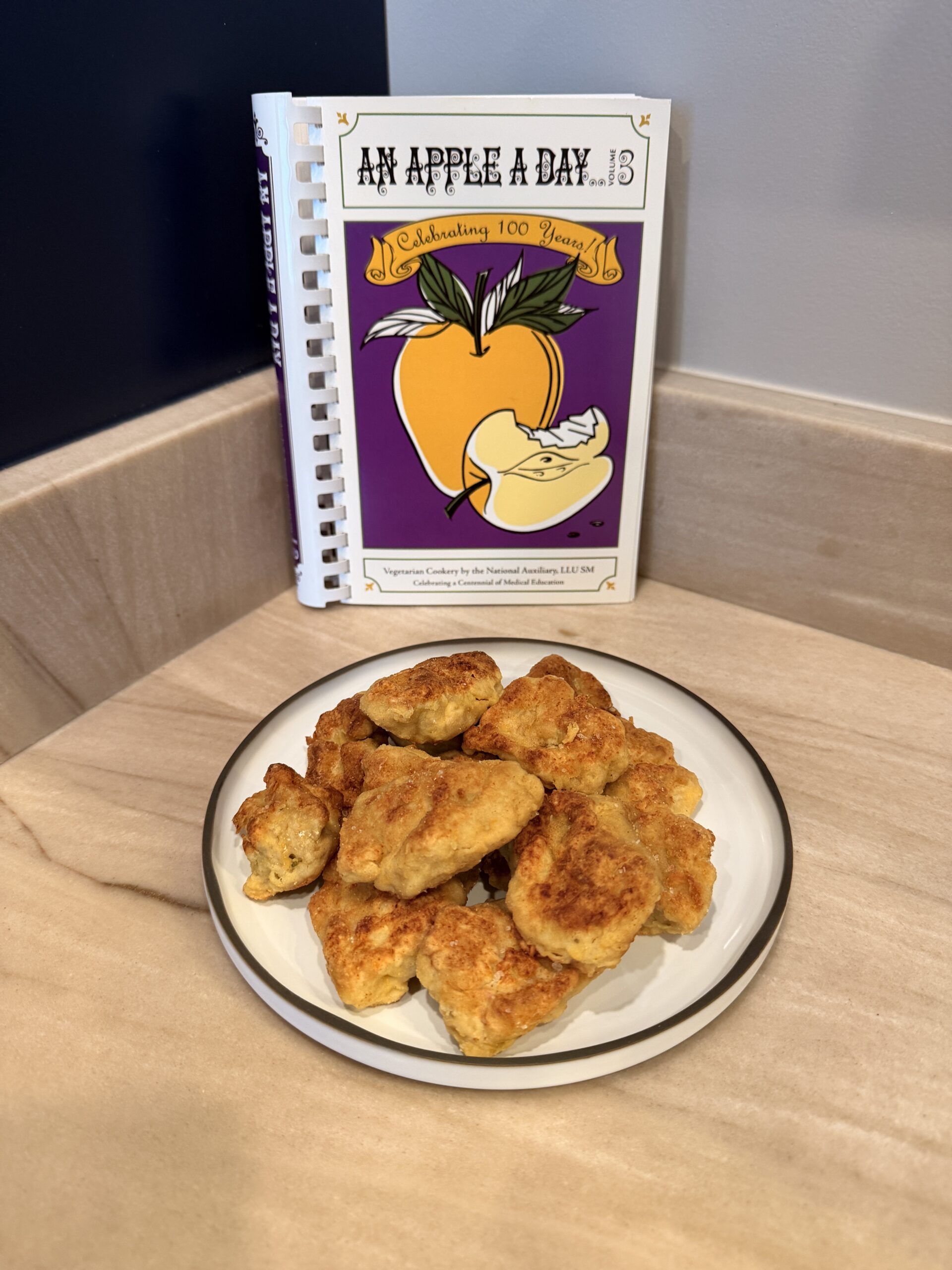
In a world where people avoid gluten at all costs, I decided to make a recipe called simply, “Gluten.” This week I jumped ahead to the 1940s to try the homemade gluten recipe.
I was supposed to be making something called Vermicelli Nut Pie from 1914, but I could not find a product called Nuttolene. More importantly, I did not feel like pouring it over thin spaghetti mixed with eggs and milk. In my mind, it was meant to be something similar to a quiche, but instead of a pie crust, it was thin spaghetti. Maybe it would have been wonderful. Maybe it was the forgotten recipe that would change my life. But to be honest, I was not feeling it. Not even a little bit.
Sometimes a recipe just gives off an energy that says, “Please do not make me.”
So I thumbed through the cookbook, skipped ahead a few decades, and settled on Gluten.
If you are a vegetarian, or you are simply trying to eat less meat, you have more than likely stumbled across meat substitutes. I am very familiar with them, since I live with a lifelong vegetarian and grew up vegetarian myself. Meat substitutes are an acquired taste, but they are not generally bad—as long as you do not go into the experience expecting them to taste exactly like actual ground beef, fish, chicken, or whatever animal they are trying to impersonate. They are their own thing. They have their own texture, their own flavor, and sometimes their own very strong opinions.
One thing we used to have all the time when I was growing up was fried Skallops. No, that is not a typo. That is what they were called. They were absolutely nothing like real scallops, but anything tastes good dipped in egg, coated in breadcrumbs, and fried. I would even argue that cardboard could be delicious with the right amount of seasoning, breadcrumbs, and hot oil.
With some help from my sister-in-law—who apparently makes gluten from scratch often enough to know what she is doing—I set out to mix water and high-gluten flour. Then I had to cut the blob of dough into pieces, boil them for an hour, bread them, and fry them.
At first, the dough looked less like food and more like something that might have been removed during a medical procedure. I was not encouraged. But after an hour of boiling, some egg, breadcrumbs, seasoning, and a trip through hot oil, it became something surprisingly good. They were probably the best thing I have cooked so far in this cookbook project, although last week’s Peanut Loaf was apparently a hit with my husband and sister-in-law. I am still suspicious of that review, but I will take it.
After my cooking pivot this week, I started thinking about how often we pivot in life. We make a plan. We picture the recipe in our minds. We gather the ingredients. Then something happens—or maybe nothing happens except that we look at the thin spaghetti, eggs, milk, and mysterious Nuttolene, and we realize we just cannot do it.
For me, someone who breaks out in hives when the word “change” is mentioned, I do not often pivot voluntarily.
Pivoting in cooking is one thing. You skip an alarming meat substitute and make fried gluten instead. Fine. You can recover from that.
Pivoting in life is a whole other kettle of Skallops.
I have been thinking a lot about turning 60 in February. I have been thinking about having a party to celebrate making it this far and being grateful for everything that has brought me here. My cousin pointed out that I should absolutely have a big party, because not everyone gets to turn 60.
That stopped me in my tracks.
She is right, of course. Getting older is not guaranteed. Being here, still upright, still able to complain about high-gluten flour and suspicious old recipes, is something worth celebrating.
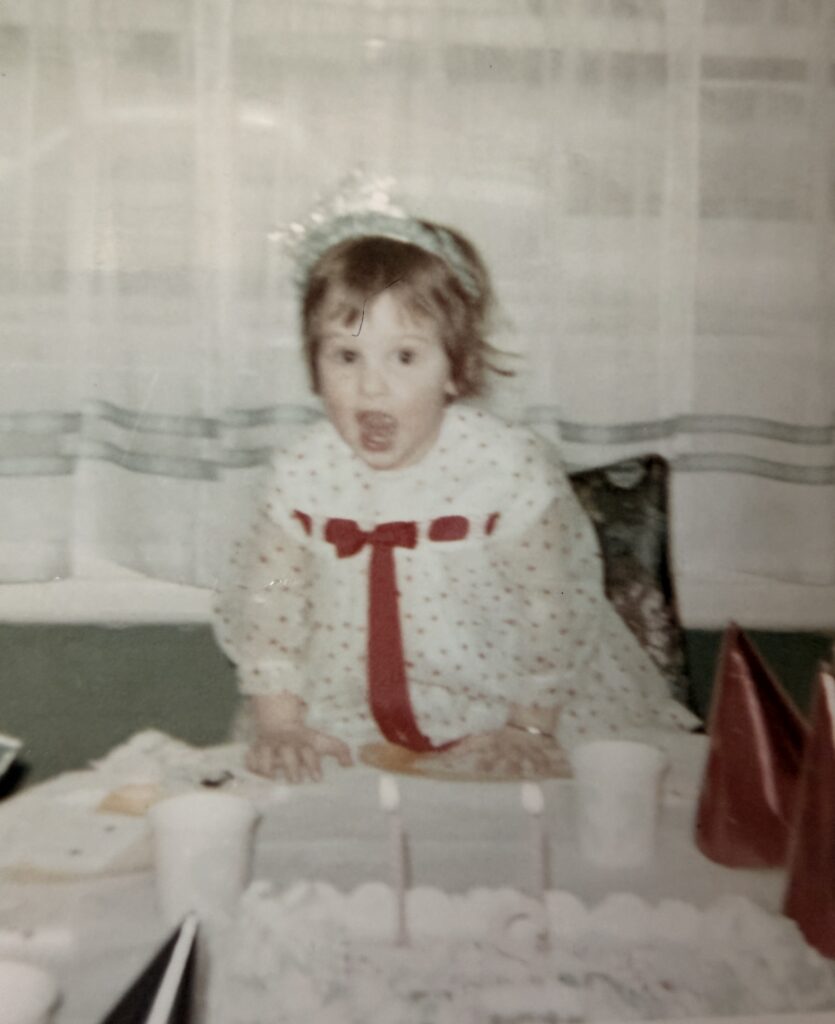
But I am someone who avoids praise and attention whenever possible. Growing up, I hated when my mom would bring out my birthday cake, set it down in front of me, and all my friends would scream-sing “Happy Birthday” at the top of their lungs. Well, except for maybe in that picture where I celebrated my second birthday. That’s a little girl who VERY much was enjoying all the attention.
As an adult, I would often lie about my actual birthday—not because I was hiding my age, but because I wanted to avoid what I considered undue attention. I did not want the singing. I did not want the cake presented as if I had won an award for surviving another year. I did not want anyone looking at me while I tried to figure out what my face was supposed to do.
So when I brought up the idea of a big birthday party, my husband looked at me a little sideways. Always supportive, he said slowly, “Oookkkkk.” He knows me. He knows this is not usually the kind of thing I suggest.
Maybe the party would be another way to pivot. Maybe I could let people celebrate me and this achievement, which, let’s face it, I didn’t do much to achieve. I basically just had to keep breathing, which is an involuntary task by nature.
Still, here I am, quickly approaching 60.
Will I have a big birthday bash at some rented hall, with a DJ and a free bar—because, let’s face it, I may need a lot of vodka? Or will I quietly pass the day with a small group of people who mean the most to me, in the place where I feel most comfortable: home?
I do not know yet.
But I am starting to come around to the idea that pivoting may be how we survive life. Perhaps I am a little late in learning this. Or maybe I have been doing it all along without giving myself credit. The fact that I pivoted my way out of two bad marriages and still stood on my own two feet is not nothing. The fact that I pivoted away from my bakery dream and into a job in show business—a business I knew nothing about—and still stood on my own two feet is, again, not nothing. As I sat at my desk, I realized this list just goes on and on.
Maybe pivoting is where the good and sweet stuff lives. Maybe it is where happiness lurks, hiding between the plans that did not work out and the ones we never meant to make.
And maybe, if I am brave enough, it is also waiting at the end of a long table in February, with people I love, a cake I did not have to make myself, and just enough vodka to get through the singing.
Yum! Love that you said it’s a mindset. No it doesn’t taste like meat, but is delicious. Fridays at the Adventist Home and Nursing Home was skallop day. I think they came with mashed or scalloped potatoes. I don’t remember, cause I just wanted a heaping helping of skallops, a side of tarter sauce and some ketchup!
May have inspired me to get my gluten recipe out and give it a shot!
Can’t wait to see what’s on the menu next.
Love your pivots….I think it is how we keep going!
I sure did love Skallop day!!!
I have to say it again! So well said! You are so funny yet poignant. Loved the read sistah! PS Im voting for a birthday bash 🤗
I love how you moved from writing about Gluten into a whole other subject of pivoting in life. You are a very clever writer
I enjoyed this very much.
Thank you so much for taking the time to read my words 🙂